

Bolaji Teniola: Five Years on from GOTYA
With nominations now closed for the DIA's Graduate of the Year Awards (GOTYA) 2026, and more than 170 individuals from across the country preparing their submissions, we are taking the opportunity to reconnect with past award winners to learn where their journeys have led since receiving the profession's highest recognition for design graduates.

Bolaji Teniola. Photo by Connor Patterson.
Our first conversation is with Melbourne-based designer Bolaji Teniola, recipient of the 2021 DIA Graduate of the Year Award (GOTYA) and a graduate of RMIT University's Associate Degree in Design (Furniture), delivered through the College of Vocational Education.
Since winning GOTYA, Teniola has established a compelling independent design practice at the intersection of design and craft, transforming underutilised materials into contemporary furniture, objects and lighting through innovative approaches to making. Along the way, he has navigated the challenges and uncertainties that often accompany the early years of professional practice, demonstrating that a design practice is not simply found, but forged over time through reflection, adaptation and persistence.
Bolaji, it has been five years since your GOTYA win. Looking back, what impact did the award have on your confidence, career trajectory and sense of possibility as a graduate designer?
BT: The Graduate of the Year Award allowed me to meet and connect with other industry figures and, most importantly, it boosted my confidence and belief that I did, in fact, belong in the industry and could one day forge my own path.

Bolaji Teniola, Amphora 2024. Photo by Alexander Robertson.
In 2021, you were at the beginning of your professional journey. What has surprised you most about the realities of building a contemporary design practice since then?
BT: My efforts to build a design practice have been challenging in many ways, but equally rewarding, thanks in part to the many extraordinary people I have encountered on my journey. It's from these encounters that I have strengthened my belief that being part of a supportive community is the most important aspect of finding success in the industry.

Bolaji Teniola, Athos XL 2025. Photo by Connor Patterson.
Your work consistently demonstrates a fascination with materiality and process. How has your relationship to design evolved with making over the past five years, and what are you exploring today that perhaps wasn't present in your graduate work?
BT: Five years on and I’m still enamoured with materials and materiality. Although I’m still spurred on by curiosity, I'm learning how to refine my design and making process and channel the results in ways that are more relatable to a wider audience, while also considering the full life cycle of materials in view of the environmental concerns that surround us.

Bolaji Teniola, Athos-Porthos-Aramis 2025. Photo by Connor Patterson.
Your career has included experiences in Australia, the Netherlands and Indonesia. How have those international experiences influenced the way you think about design, and the role of the designer today?
BT: My understanding of what design could be was expanded through my time in the Netherlands and my stint in Indonesia, which provided a masterclass in imbuing culture and narrative in contemporary design. The opportunities in Australia then gave me the time to put those lessons into practice. However, my main takeaway from these experiences was how the design industry is perceived and valued in each country. For example, in the Netherlands, design appeared to be front and centre in society, supported by renowned academies and colleges, and strong government backing. In comparison, I think our design industry and culture is taken for granted, yet despite this, I’m incredibly optimistic about the future of Australian design.

Bolaji Teniola, Blanco Chair 01 2025. Photo by Connor Patterson.
Many graduates aspire to establish an independent practice, yet the path is rarely straightforward. Looking back on the years since your GOTYA win, what opportunities, platforms or communities have been most instrumental in helping you build your practice, and what have you learned about creating your own opportunities along the way?
BT: Since my GOTYA win, I'd say the biggest thing for me has been getting the opportunities to show my design work in group exhibitions across Australia and overseas to diverse audiences. Not only were these opportunities great for testing ideas, trialling them in the market, and pushing myself creatively, but they also allowed me to refine my design process, gain a clearer understanding of how I fit within the design industry, and, most importantly, connect with other designers, makers, craftspeople and creative practitioners. These experiences have expanded my practice and created opportunities that have been both empowering and rewarding, and now they motivate me to give back to the communities that have given so much to me through curating and facilitating similar experiences for others.
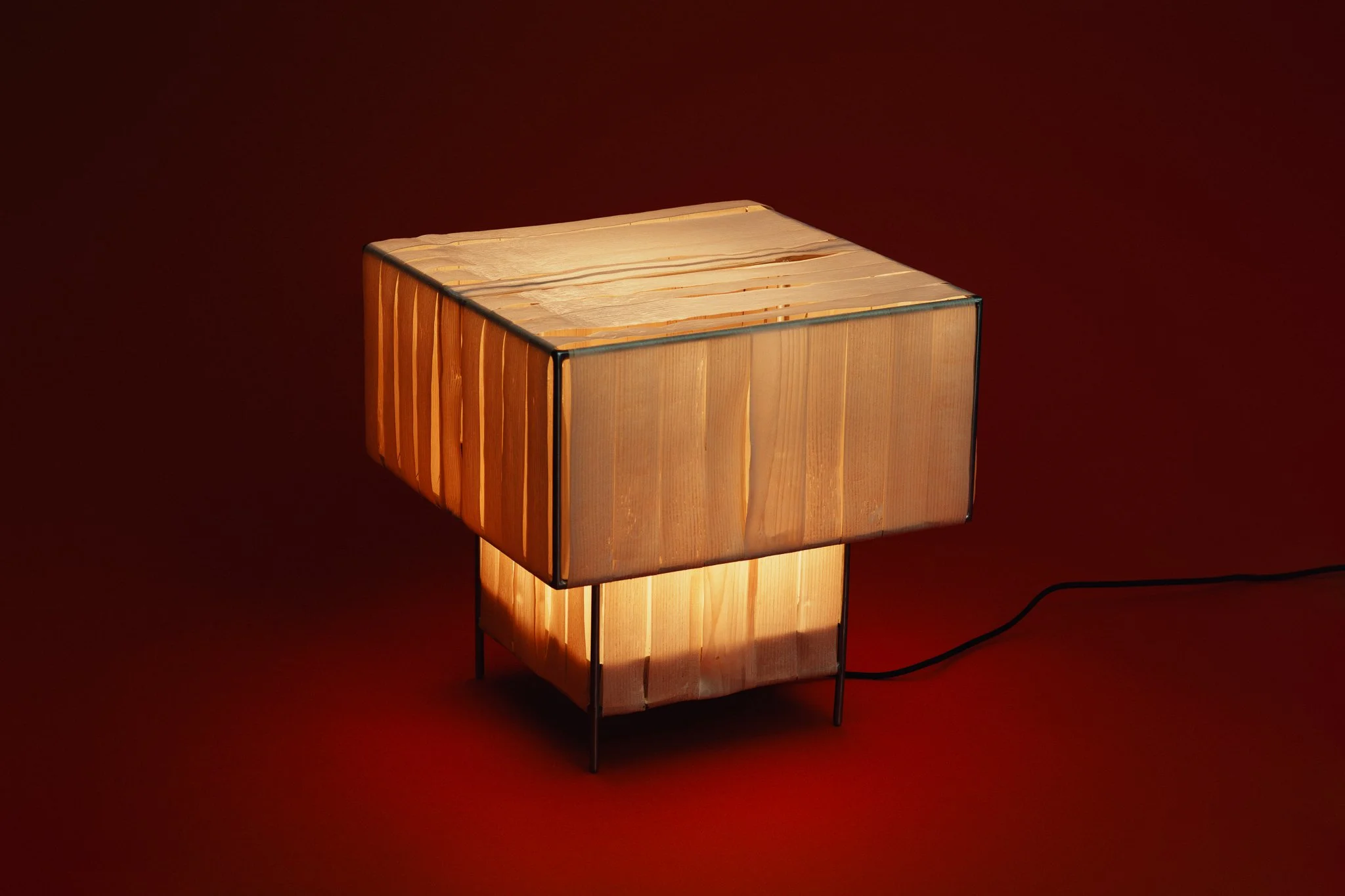
Bolaji Teniola, Daedalus Table Lamp 2025. Photo by Connor Patterson.
For graduates preparing their GOTYA submissions this year, what advice would you offer about finding their voice and navigating the transition from education into professional practice?
BT: I hate to state the obvious here, but take your time. Your career is a marathon, not a sprint. Although your idea of success might change over time, and technology, as well as the way we work, will continue to evolve, being flexible enough to adapt to these changes while staying focused on your goals will go a long way towards helping you build a professional practice. Also, don't be afraid to connect and collaborate with others.

Bolaji Teniola, Sentinel 2024. Photo by Sarah Forgie.
Looking ahead, what questions, ideas or ambitions are currently driving your design practice, and what would you like people to understand about your work five years from now?
BT: At this point in my career, I'm not too concerned with trying to be understood or viewed in a particular way. I'm more interested in continuing to explore materials, refining my process, and channelling my efforts into the development of accessible and meaningful design pieces.