

DIA Hall of Fame 2025 Announced
Professor N'arwee't Carolyn Briggs AM, Paul Charlwood, Paul Huxtable, Geraldine Maher and Cal Swann

The Design Institute of Australia (DIA) announces the names of five eminent Australian designers to be inducted into the DIA Design Hall of Fame for 2025: Professor N'arwee't Carolyn Briggs AM, Paul Charlwood, Paul Huxtable, Geraldine Maher and Cal Swann. Since its inception in 1996, the DIA Hall of Fame has recognised more than 140 Australian designers whose work has shaped and elevated our nation’s design culture. It stands as the highest honour in Australian design. The 2025 recipients represent design education, industrial and interior design. We would be delighted if you could attend.
We would be delighted if you could attend and join us in celebrating the contributions of the 2025 recipients to Australian design on Thursday 26 March 2026, 6:00–9:00PM at the NGV International Garden Restaurant, Melbourne.
The DIA Hall of Fame 2025 Inductees are:
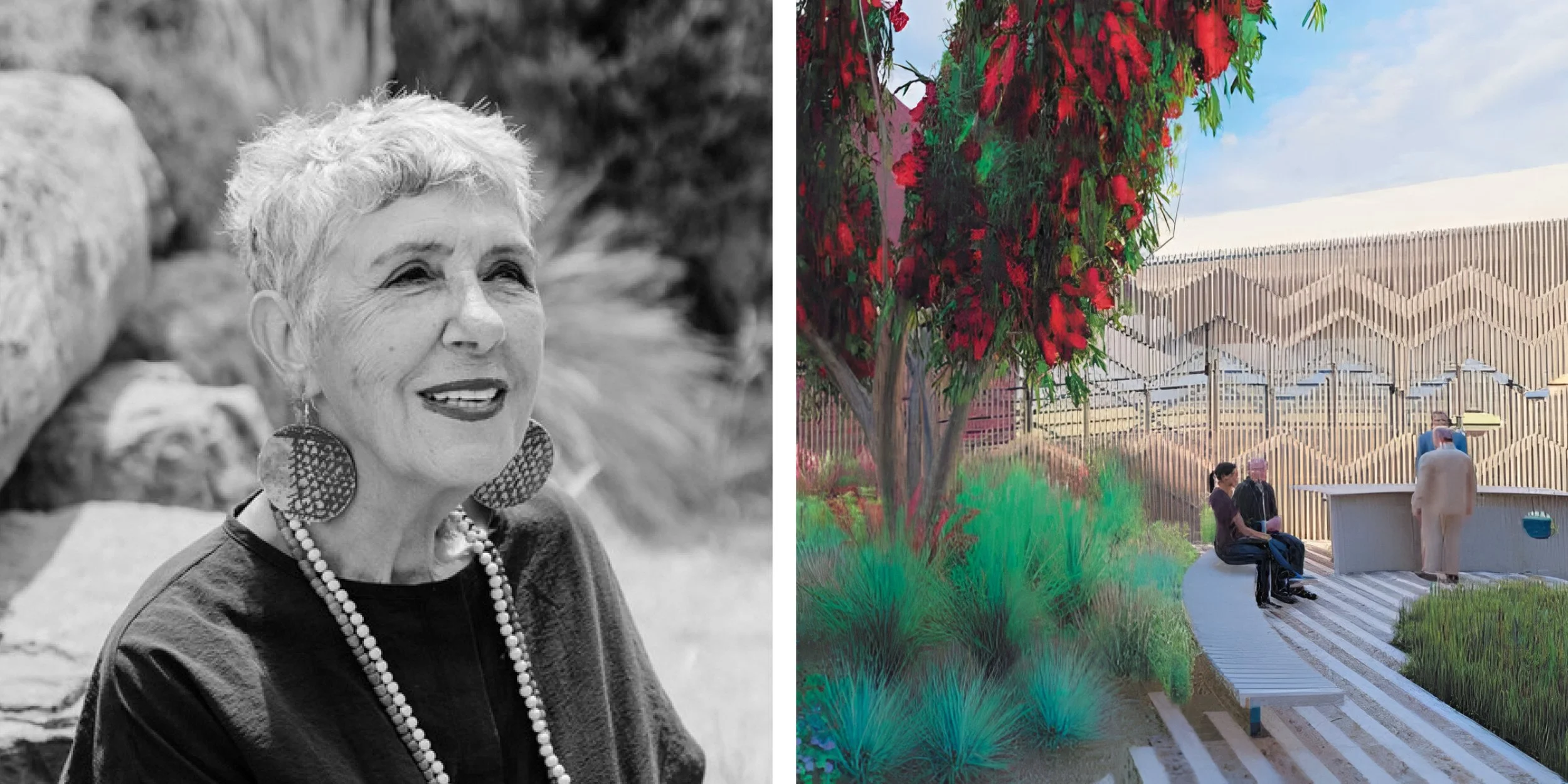
Professor N'arwee't Carolyn Briggs AM
Design Education
Professor N'arwee't Carolyn Briggs AM is a highly respected Boonwurrung Elder, cultural leader, and spatial design collaborator whose lifelong contribution has significantly influenced Australian design thinking. Her practice merges Indigenous knowledge systems, language reclamation, and spatial storytelling to advance both cultural revitalisation and contemporary design discourse.
Her design achievements include co-leading public installations such as Ngargee Djeembana (ACCA, NGV, MPavilion) and shaping frameworks within the Wominjeka Djeembana Research Lab at Monash University, where she guides cross-disciplinary projects that reframe design through Country and community. Her professional activity spans decades of advocacy, education, and advisory roles, including as founder of the Boonwurrung Foundation.
Carolyn has made an altruistic contribution by mentoring Indigenous youth, preserving oral histories, and advocating for the rightful place of First Nations knowledge in Australian culture. While not a formal member of the DIA, her work directly aligns with its mission to elevate ethical and culturally intelligent design practice.
She has received national and international recognition, including being appointed a Member of the Order of Australia. She is Elder Advisor Yiiramboi and Elder Advisor to Ilbijerri theatre and City of Melbourne Chair of public art. She designed the Masters of Architecture in First peoples ways of knowing and being at RMIT for international students and non-indigenous students. Her work has been published in academic papers, major cultural exhibitions, and design journals, and she is regularly sought after by institutions and governments for her guidance and cultural authority.
She was named the NAIDOC Female Elder of the Year in 2011, was listed on Victoria’s Honour Roll of Women in 2005, and served as a judge for the Australian Good Design Awards.
Carolyn’s character and public profile embody integrity, humility, and visionary leadership. Her induction into the DIA Hall of Fame would honour a truly foundational figure whose impact transcends disciplines and continues to shape the future of inclusive, regenerative, and culturally rooted design in Australia.

Paul Charlwood
Industrial Design
Paul Charlwood is an influential industrial designer based in Melbourne, recognised for his substantial contributions to design practice, education, and advocacy in Australia. Passionate about design in all its facets, he has engaged with many areas of design culture during his career.
Paul graduated from the inaugural Industrial Design degree at RMIT University and began his career at Philips Design in Melbourne. He later held design roles at PA Technology/Invetech and NeoTechnics Design before becoming Design Manager at Bytecraft Theatre Equipment. There, he contributed to projects including work for the Sydney Opera House, to the National Centre for Performing Arts in Beijing, and the pioneering coloured lighting of the Melbourne Concert Hall spire.
He established his versatile industrial design consultancy Charlwood Design in 1993 and has since developed a reputation among clients and peers for his innovative, sustainable yet elegant design solutions for consumer, and capital applications. Consequently, the consultancy has collected a raft of design prizes and accolades, among them the inaugural Premier’s Design Awards, numerous local and international design awards, as well as being admitted to the Australian Manufacturing Hall of Fame. Among the studio’s most iconic achievements is the Queen’s Baton for the 2006 Commonwealth Games, celebrated for its distinctive form and integrated technology.
Paul’s work has been exhibited internationally, including in the Smithsonian Institution’s Cooper-Hewitt National Design Museum National Design Triennial: Why Design Now? and locally in the Powerhouse Museum Design Collection and NGV’s Melbourne Design Now exhibition.
A committed advocate for Australia’s design industry, Paul has served as State President and Director of the Design Institute of Australia, co‑authoring its education policy and contributing to strategy and policy development for both industry and government. He collaborated with the RMIT Centre for Design to help establish the Design for Sustainability Working Group and the Greenfly online lifecycle assessment tool.
Paul is also the founder of the best‑selling Melbourne Design Guide, a 350‑page compendium of local design culture, as well as its companion Sydney Design Guide. He has taught numerous design studios at RMIT, chaired course design accreditation processes, served on advisory boards, judged major design awards, and contributed to multiple government committees, further cementing his role as a champion of design excellence in Australia.

Paul Huxtable
Industrial Design
Paul Huxtable has made a significant contribution to industrial and engineering design, product development, design export, and design business development in Australia during a career spanning five decades.
He began his career in 1971 at Caroma, and from 1977 to 1986 at Simpson Limited, manufacturers of laundry and kitchen appliances Simpson, Malleys and Kelvinator brands. As part of the Simpson Malleys team, Paul was instrumental in designing Australia’s first award-winning dishwasher receiving the Prince Phillip Design Prize and an Award for Excellence from the Australian Institution of Engineers in 1982.
As the Design and Engineering Manager for Simpson Ltd (now Electrolux) from 1984-86, Paul oversaw the establishment of the company’s first Industrial Design team that worked across all appliance product groups.
In 1986 to 1989 Paul returned to Caroma as R&D Manager (plastics), focussing on dual flush design.
In 1989 he founded PHD Product Development Pty Ltd and developed a client base across Australia, Malaysia and the USA. In 1994 he founded Proen Design. Between 1994-2008, as Chairman and managing Director, he led the company to become one of the biggest product design consultancies in Australia, with offices in Adelaide, Melbourne and Kuala Lumpur. He co-authored multiple international patents and designed and commercialised countless products. Major award-winning projects included the Protect-It Column Guards for health and safety in warehouse settings. The Protect-It Column Guards were manufactured in South Australia and sold in over sixty countries. In 1989 Proen Design was a national winner in the Telstra Business Awards, and received a Telstra Innovation Award in 2007, and a Business SA Export Award in 2014.
Paul’s work has been recognised by Powerhouse Museum Selections (2005 and 2008), a Chicago Athenaeum Good Design Award (2008), Korean Design Council Selections (2005 and 2008), and multiple Australian Good Design Awards across five decades.
Paul is currently a Design Advisor to the Australian Design Council, one of a select group of design leaders who shape the Australian Design Council’s Design Impact Program that champions Australia’s design future.
Paul was elevated to Fellow of the Design Institute of Australia, and in 2017, he received a South Australian Design Icon Award from the Design Institute of Australia. He is a retired Fellow of the Australian Institute of Company Directors.
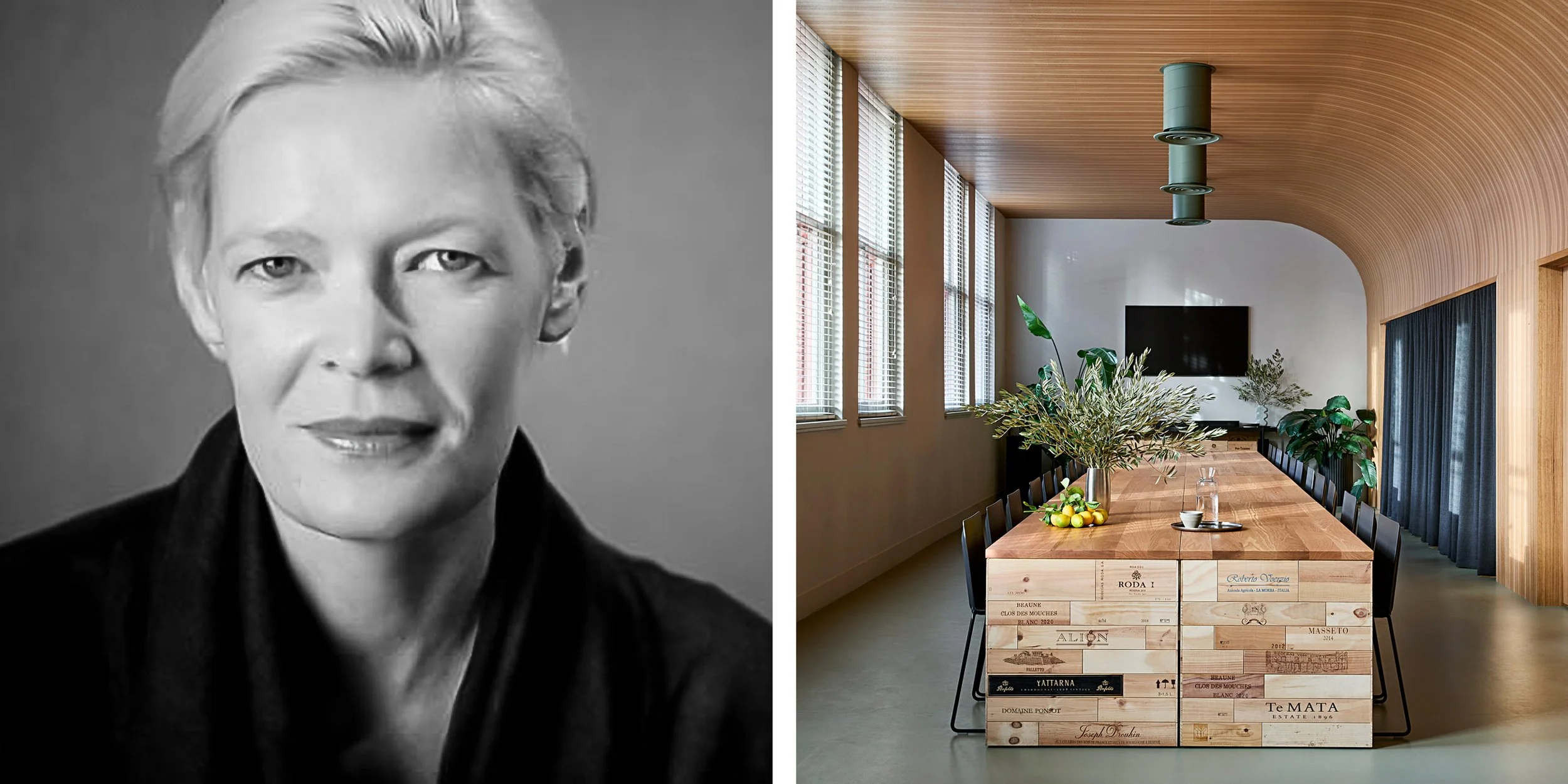
Geraldine Maher
Interior Design
Geraldine Maher is an outstanding Australian interior designer whose career has made a sustained and influential contribution to interior design practice in Australia. She is the founder and director of Maher Design and is widely respected for her intellectual rigour, design integrity and commitment to excellence across complex civic, institutional and cultural projects.
Throughout her practice, Geraldine has united conceptual clarity with deep technical knowledge. Her work is distinguished by a thoughtful and disciplined design process, grounded in rigorous exploration of spatial planning, materiality and detail. With a strong commitment to contextual responsiveness, she has consistently advanced the relationship between interior and exterior environments, creating spaces that are authentic, humane and enduring. Her advocacy for sustainability through minimal intervention—prioritising small, efficient and uplifting spaces—is an important component of her design philosophy.
Geraldine studied Interior Design at RMIT University, complemented by an exchange in Interior Architecture at the Fachhochschule in Wiesbaden, Germany. She began her professional career while still a student as an architectural assistant at Hassell, before gaining international experience as an interior designer in Hong Kong with Woods Bagot, RMJM and PSI International. This early exposure to global practice laid a strong foundation for her later leadership in large-scale and complex projects.
Upon returning to Australia in 1995, Geraldine joined Daryl Jackson Architects, where she would spend the next 22 years shaping some of the country’s most significant public interiors. Rising to become Associate, then Principal of Jackson Architecture and Director of Jackson Interiors, she played a pivotal design and leadership role across a diverse portfolio encompassing justice, education, workplace, hospitality, retail and public institutions. Her contribution to landmark projects—including the Victorian County Court, the Western Australian Supreme Court, the MCG Members’ Stand, the MCC Long Room and the Forum Theatre refurbishment—has left a lasting imprint on Australia’s civic and cultural landscape.
In 2018, Geraldine established Maher Design, continuing her practice with clarity of vision and independence. The studio has delivered a range of bespoke residential, retail, hospitality and workplace projects across Australia, many of which have been widely published in leading design journals. Central to her practice is a collaborative and relationship-driven approach, underpinned by respect for clients, consultants and craftspeople. Geraldine continues to contribute to public projects through strategic collaboration with architectural practices and advisory roles within the industry.
Beyond practice, Geraldine has made a significant contribution to the profession through leadership, advocacy and mentorship. She is a highly regarded guest speaker, juror and academic mentor, and enjoys sharing her knowledge with emerging practitioners. Notably, she has chaired the Australian Interior Design Awards for several years, guiding juries with insight, fairness and authority to ensure outcomes of the highest professional credibility.
An Accredited Member of the Design Institute of Australia, Geraldine exemplifies leadership through practice, service and integrity and her career reflects a deep commitment to the advancement of interior design as a discipline. Her induction into the DIA Hall of Fame recognises an enduring legacy of excellence, leadership and contribution to the profession.
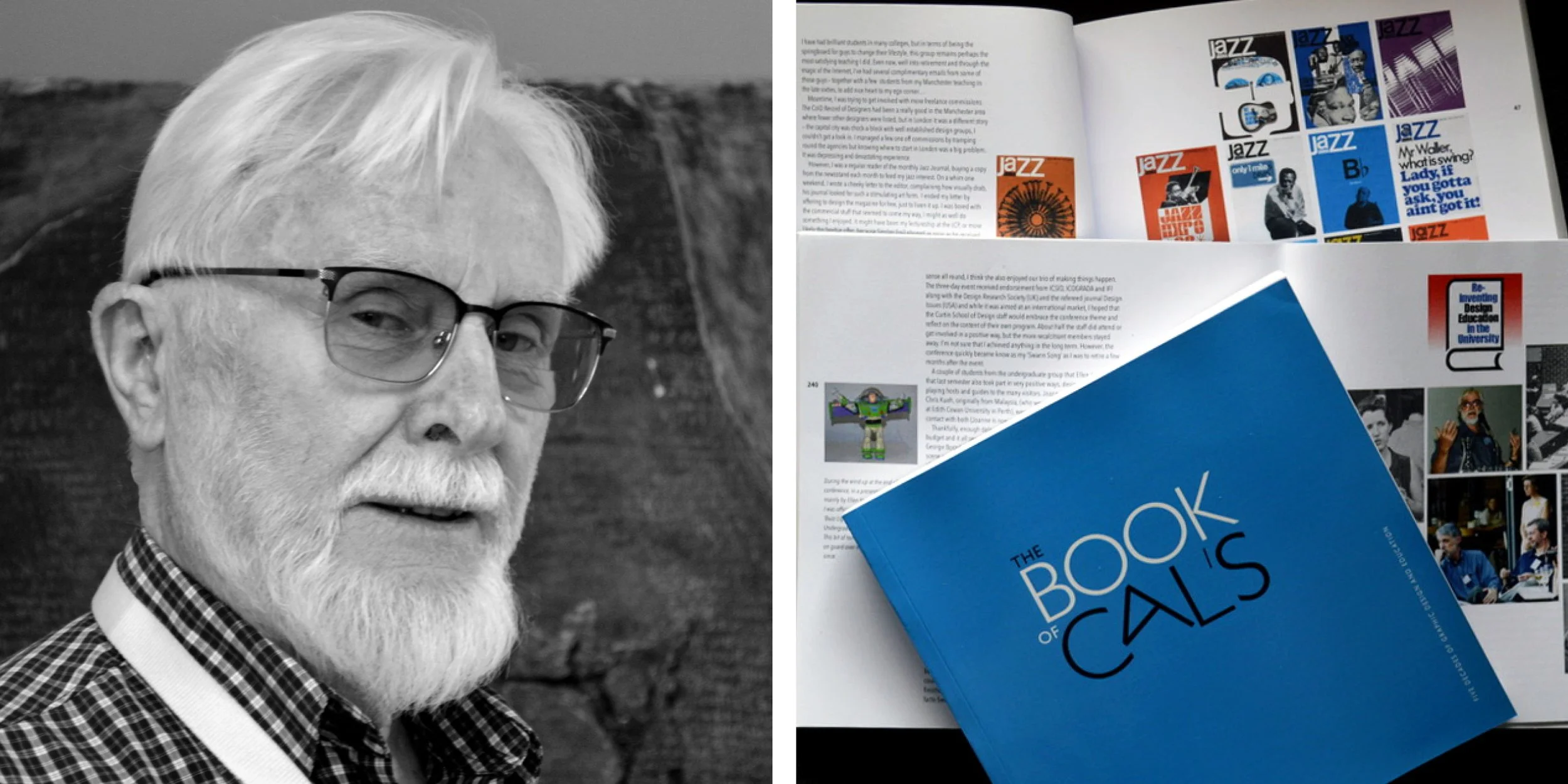
Cal Swann
Graphic Design
Cal Swann is a distinguished design academic and typographer with a career spanning over fifty years, notably impacting graphic design education in both the UK and Australia.
Swann began his career after studying typography at Leicester College of Art, receiving his NDD in 1956. Early roles included work in print design and advertising, as well as lecturing across the UK. He served as Head of Graphic Design at Saint Martin’s School of Art in London (1981–1986), interacting with leading European designers. His next UK post was as Dean and Professor of Typographic Design at Liverpool Polytechnic, with responsibilities spanning Fine Art, Fashion, Textiles, Communication, Interior, and Product Design.
Swann moved to Australia in 1989, becoming Head of Design at the University of South Australia, where he was appointed Professor of Typographic Design. In 1996, Swann joined Curtin University (Perth, WA) as Professor of Design, developing the first professional design course offered by distance education and coordinating research degrees until his retirement in 2001.
He continued teaching part-time, developing and teaching online typography courses for Virtu Design Institute until 2019.
Swann was awarded a Professorship in Typographic Design (University of South Australia), marking his international academic status. He is credited with developing one of the first global online Master of Design courses. He was also awarded the Honorary Fellowship from the International Society of Typographic Designers in 2017.
His books, including Techniques of Typography (1969) and Language and Typography (1991), are considered influential in design education.
He served on the national council of the Design Institute Australia in the early two thousands and most recently he has published the Book of Cal’s, a reflection on being a designer and educator in the second half of the twentieth century.