

Blanche Tilden on why making and design are inseparable
"You can't make…" is one of the provocations at the heart of the DIA's Write DESIGNER campaign, voiced by N'fa Jones and answered by the work of renowned contemporary jewellery designer and maker Blanche Tilden. Featured in the campaign, Blanche's work demonstrates the power of design to distill complex ideas into objects of beauty and meaning. Many people may not realise that jewellery designers are now recognised within the ABS's new Minor Group 242 Design Professionalsfor the 2026 Census. Simone LeAmon, CEO of the DIA, spoke with Blanche about the relationship between craft and design, and why being counted matters for the future of the jewellery profession.
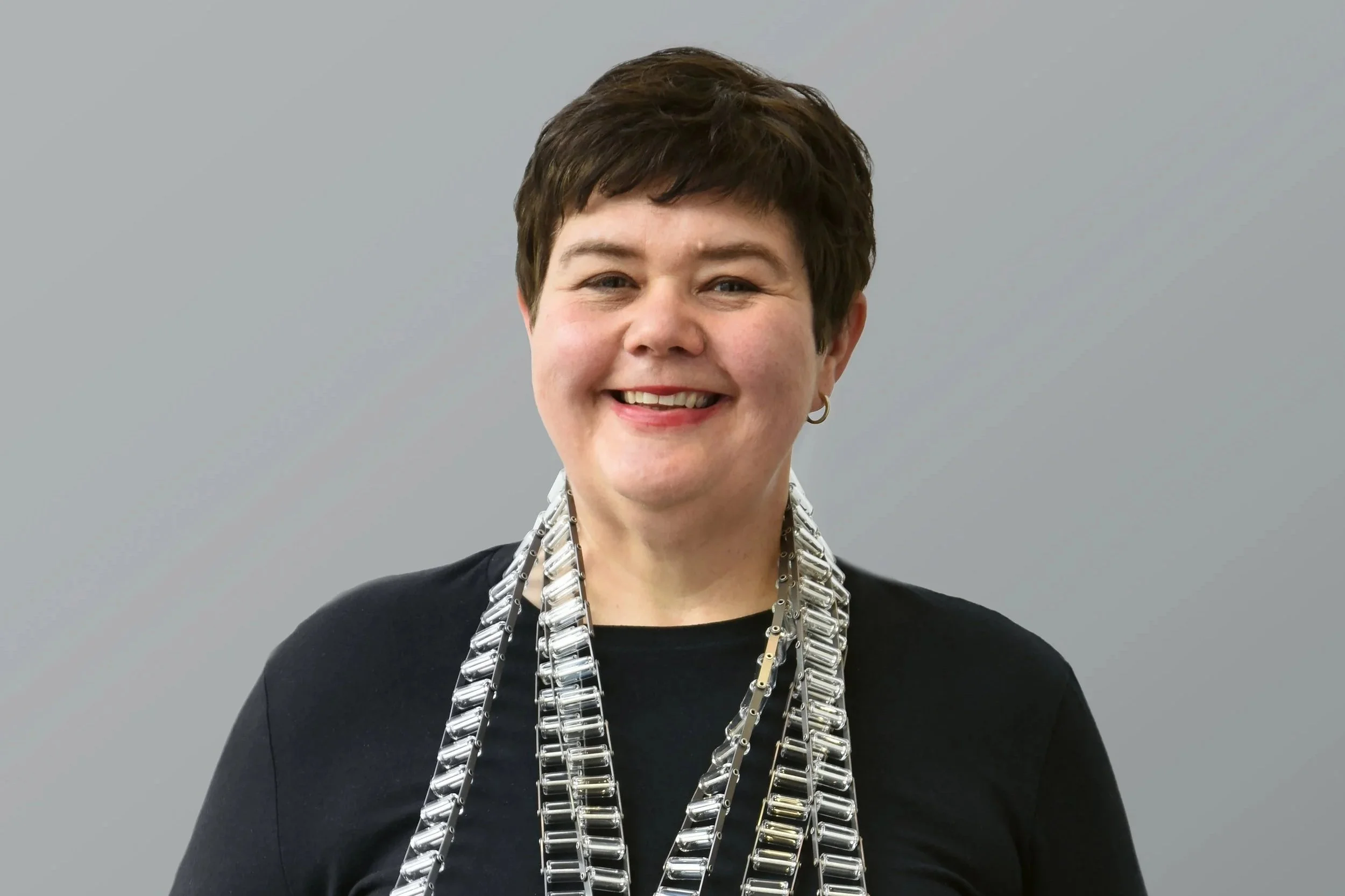
Blanche Tilden. Photography: Marcus Scholz
Q: Your work sits at the intersection of contemporary craft and design. How do you define design, and what role does it play in shaping the ideas you bring into the world?
BT: Design, to me, is a way of thinking as much as it is a way of making. It’s a framework for understanding how objects function in the world; how they’re constructed, how they’re used, and how they communicate. My long-standing fascination with industrial processes means that I often approach jewellery through the lens of systems: the systems of production, the systems of value, and the systems of meaning we attach to materials and objects. Design helps me navigate those systems. It gives me a language for exploring how a necklace, made to be worn, and move with the body, can speak to larger ideas about technology, architecture, and the environments we build around ourselves.
Design is inseparable from craft in my practice. Craft brings the hand, the body, and the intimate scale of making into the conversation. It’s where precision meets intuition. When I’m working with borosilicate glass and titanium I’m negotiating with these materials, responding to the way they behave, and allowing inherent qualities to shape form. That interplay between intention and material is central to how ideas emerge in my work.
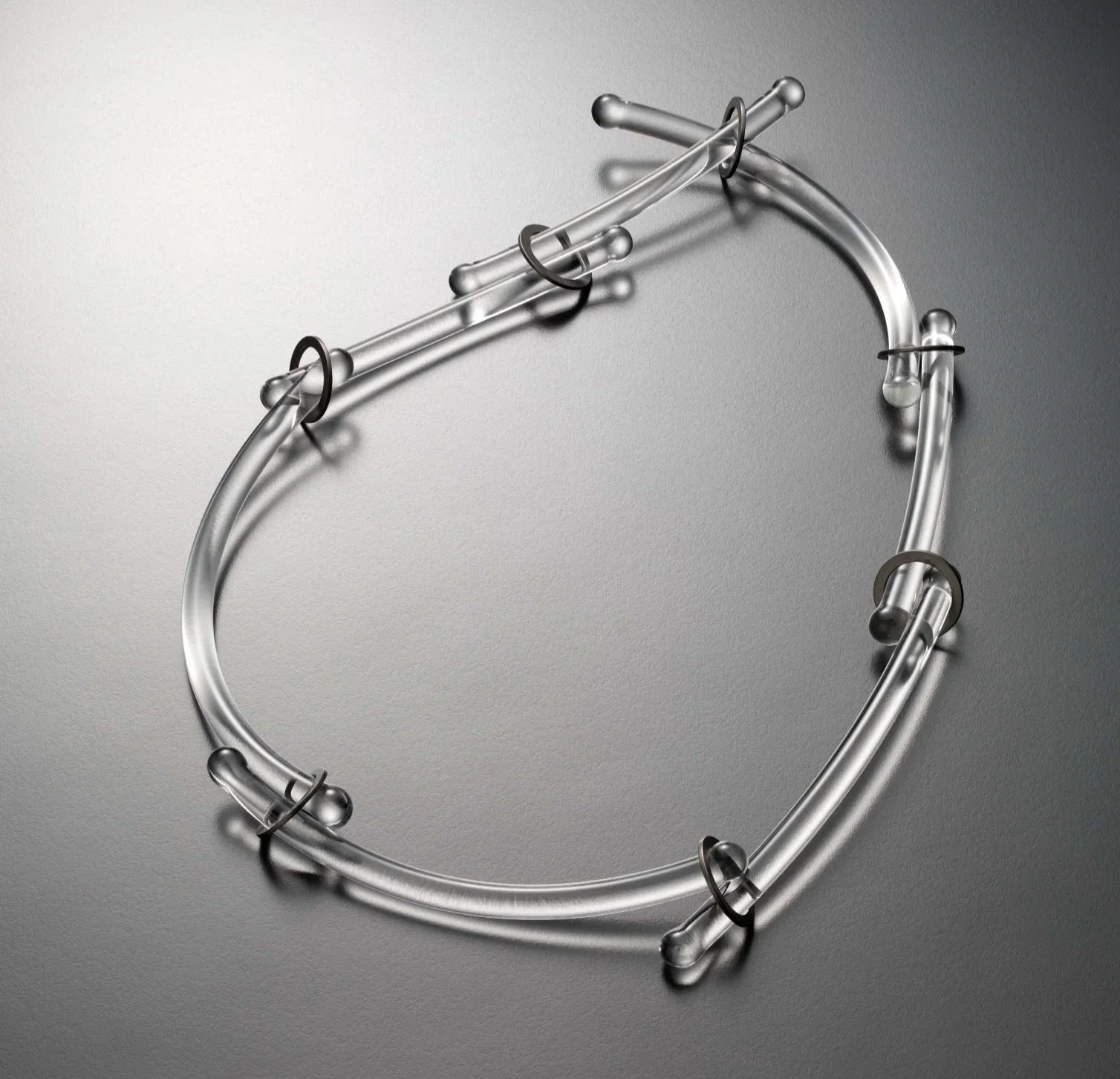
Blanche Tilden, Flow necklace. 2016. Flameworked borosilicate glass, titanium. Photography: Grant Hancock
Q: Your practice combines meticulous handmaking with industrial processes, research and material knowledge. How does making itself contribute to the design process, rather than simply being the final stage of production?
BT: Making is the engine that drives the conceptual process in the studio. Physical engagement with materials reveals possibilities that can’t be accessed through drawing or planning alone. When I’m working with borosilicate glass, for example, the act of heating, bending and shaping it is a form of research. The material responds, resists, surprises. Those moments of discovery, where the glass behaves in a way I didn’t expect, often become the catalyst for new directions in the work. Making becomes a push and pull between materials and ideas, and the work evolves through that dialogue.
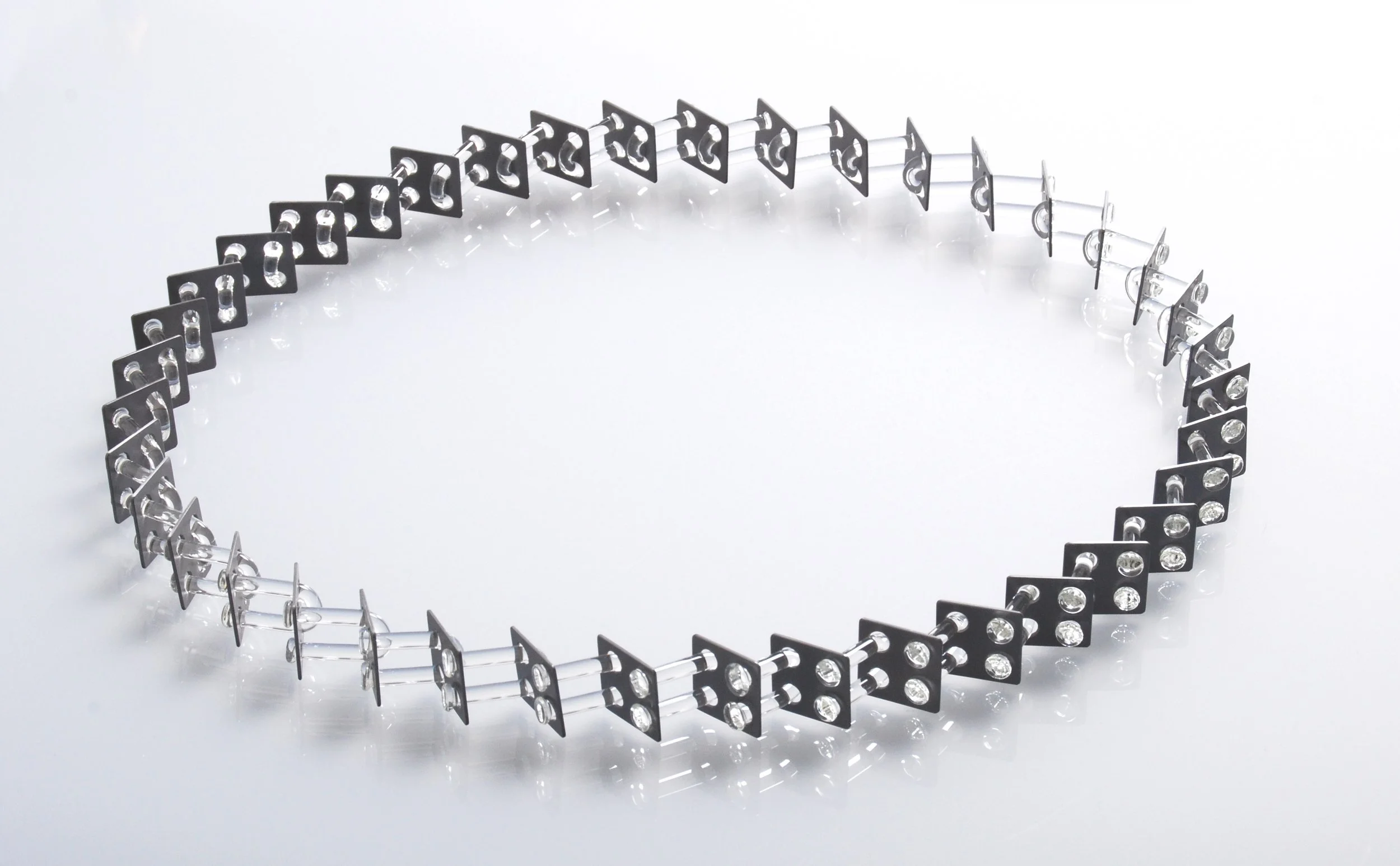
Blanche Tilden, Parallel necklace, 1995. Flameworked borosilicate glass, titanium. Photography: Marcus Scholz
Industrial materials demand a particular kind of embodied understanding. Titanium, glass, and repurposed components from mass production such as camera lenses and bicycle chains carry histories of engineering and technology. Beautifully designed and made objects that are often superseded by newer versions or made invisible because they are so much a part of our everyday lives provide a rich seam of inspiration for me. By revaluing objects I’m able to uncover the embedded narratives they hold. Making is how I learn, how I question, and ultimately how I shape the ideas I bring into the world.
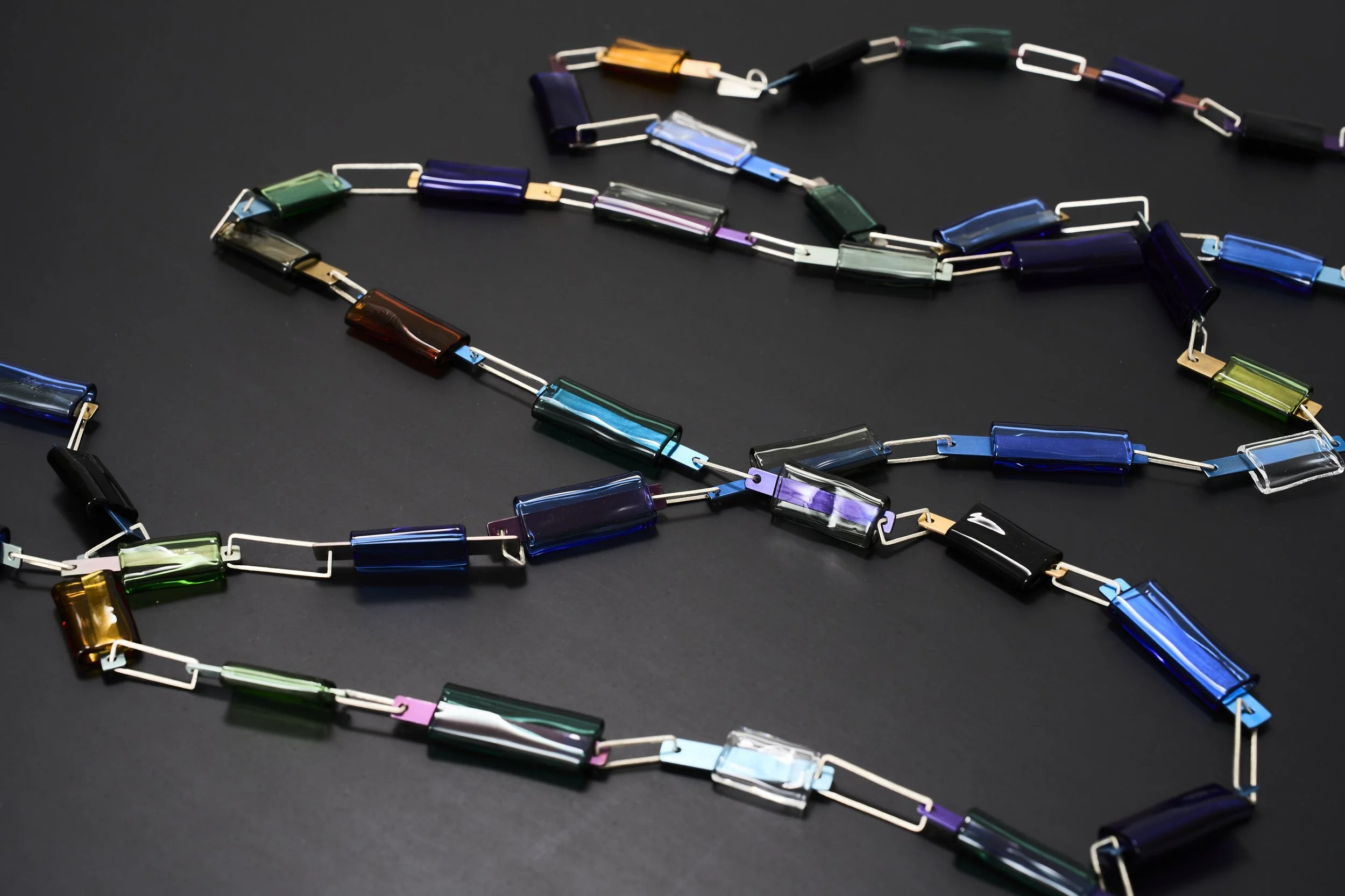
Blanche Tilden, Dexion necklace, 2025. Flameworked borosilicate glass, anodised titanium, 925 silver. Photography: Claire Armstrong
Q: Your contemporary jewellery often carries ideas about technology, value, sustainability and the built environment, while remaining deeply personal because it is worn on the body. What do you think jewellery can uniquely contribute to Australia's design culture?
BT: Australia has a strong tradition of designers responding to place, materiality and resourcefulness, and jewellery contributes a unique perspective to that conversation. Because jewellery is small-scale, it allows for experimentation with materials and processes that might be impossible in architecture or industrial design. It can question ideas of value, sustainability and consumption through its very construction, whether that’s by re-imagining industrial materials, re-using components, or drawing attention to the systems that shape our environment. Jewellery also carries stories. It moves with the wearer, gathering experiences, becoming part of their identity. In that sense, it enriches Australia’s design culture by reminding us that design is not only about objects and spaces, but about lived experience — how we inhabit the world, and how the world leaves its mark on us.

Blanche Tilden, Through the Lens 04 necklace, 202. Salvaged glass camera lenses, anodised titanium, oxidised 925 silver. Photography: Andrew Curtis
Q: The Write DESIGNER campaign features your necklaces Flow (2016) and Parallel (1995). These works transform industrial materials such as borosilicate glass and titanium into jewellery rich with embedded meaning. As one of humanity's oldest forms of communication and expression, what unique power does contemporary jewellery design have to communicate ideas and change how we think about materials, value and the world around us?
BT: Because jewellery is worn, it has a unique ability to shift how people perceive materials. Glass, for example, is often seen as fragile or utilitarian. But when it’s re-imagined as a necklace or bracelet, it becomes precious in a different way. It invites people to reconsider what “value” means: is it rarity, craftsmanship, cultural significance, or the story embedded in the object? Contemporary jewellery can challenge assumptions about preciousness by elevating industrial materials, recycled components, or overlooked fragments of the built environment. In doing so, it encourages a more expansive understanding of beauty and worth.
Ultimately, jewellery’s power lies in its ability to communicate quietly but persistently. It doesn’t shout; it accompanies. It moves through the world with its wearer, sparking conversations, prompting curiosity, and creating moments of connection. In a culture increasingly shaped by rapid technological change, jewellery can act as a reflective surface (literally and metaphorically) helping us see our world differently and recognise the intricate networks of material, labour and meaning that underpin it.
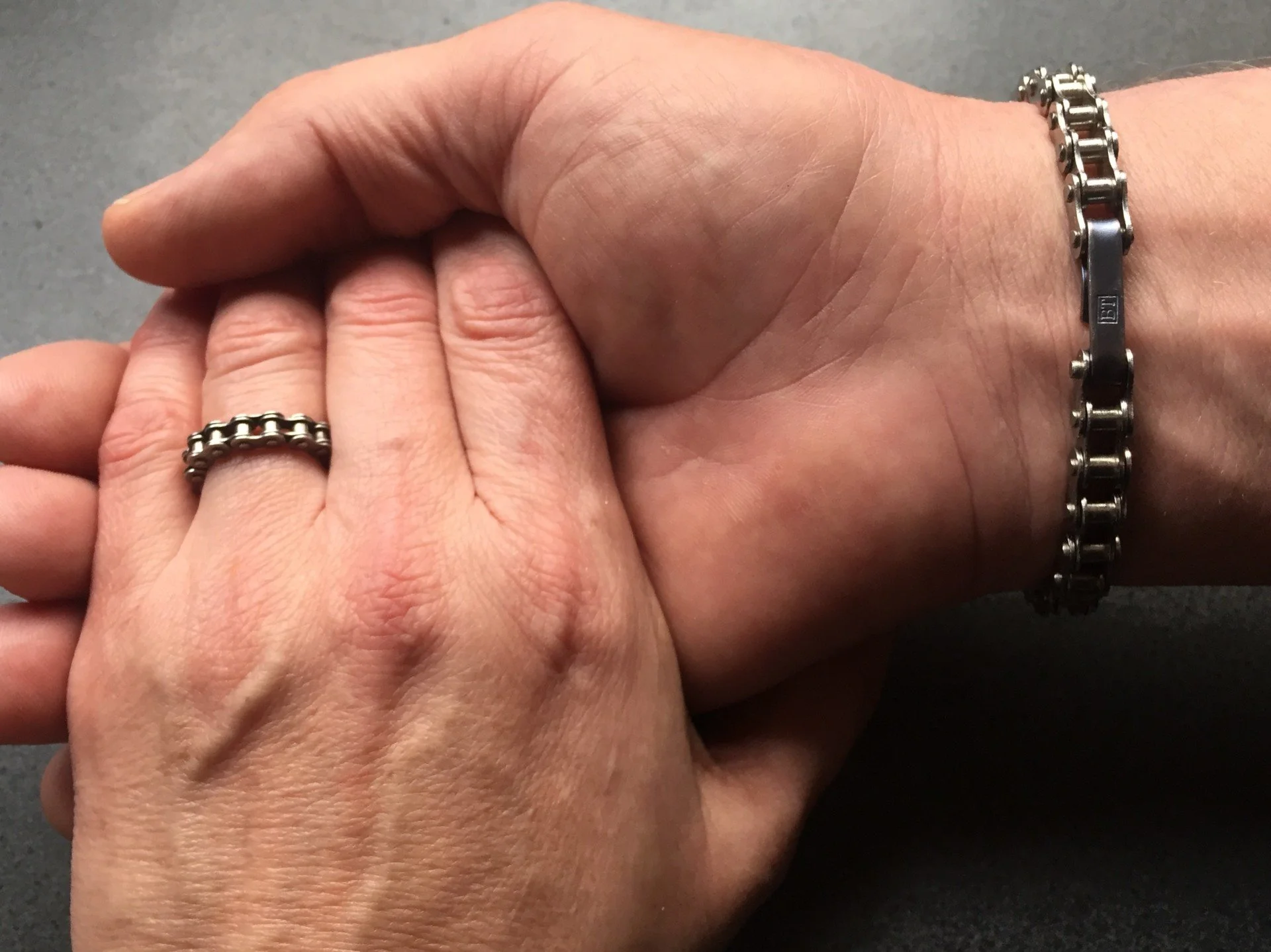
Blanche Tilden, Bike Chain ring and bracelet, 2000. Stainless steel machine chain, anodised titanium. Photography: Tiffany Parbs
Q: Many contemporary jewellers may not immediately think of themselves as designers. What would you say to someone who is unsure whether to identify as a designer in this year's Census, and why do you think being recognised and counted matters for the future of both contemporary jewellery and Australian design?
I would say that if you’re unsure whether to identify as a designer, that uncertainty is actually a sign of how rich and multifaceted contemporary jewellery practice has become. Many jewellers come from craft traditions where the hand, the studio and the intimate scale of making are central. But jewellery also engages deeply with ideas, systems, materials and technologies, all of which sit firmly within the realm of design. If your work involves shaping how objects communicate, how they’re experienced, and how they contribute to culture, then you are participating in design, whether or not you consider yourself a designer. Claiming that identity doesn’t diminish the craft; it expands the conversation around what jewellery can be.
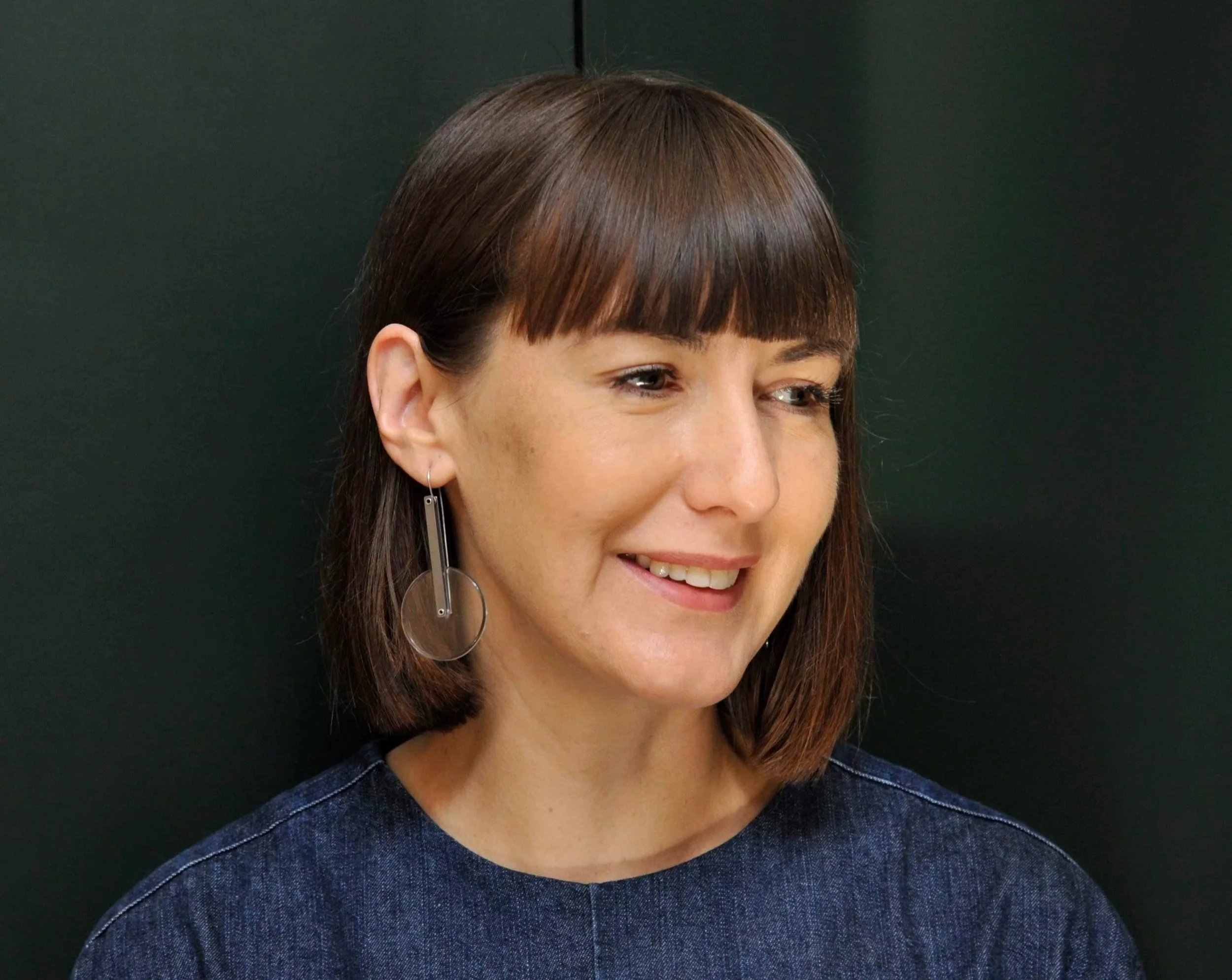
Blanche Tilden, Spin earrings worn by Emma Telfer, 2016. Flameworked borosilicate glass, titanium, oxidised 925 silver. Photography: Marcus Scholz
Being recognised and counted matters because visibility shapes the future of our field. When jewellers identify as designers in the Census, it helps demonstrate the breadth and strength of Australia’s design culture. It shows that design isn’t only happening in large studios, architectural firms or tech companies, it’s also happening at the bench, in small workshops, through practices that merge innovation with material knowledge and cultural inquiry. Contemporary jewellery often operates at the edges of design discourse, but those edges are where new ideas emerge. By being counted, jewellers help ensure that our sector receives the recognition, support and investment it needs to thrive.
For me, it’s also about advocacy. Jewellery has a unique ability to communicate ideas about value, sustainability and the built environment in ways that are personal and immediate. When jewellers are included in the national picture of design, it reinforces the importance of those contributions. It helps future generations see jewellery not just as adornment, but as a vital part of Australia’s creative and cultural landscape — one that deserves to be acknowledged, nurtured and celebrated.
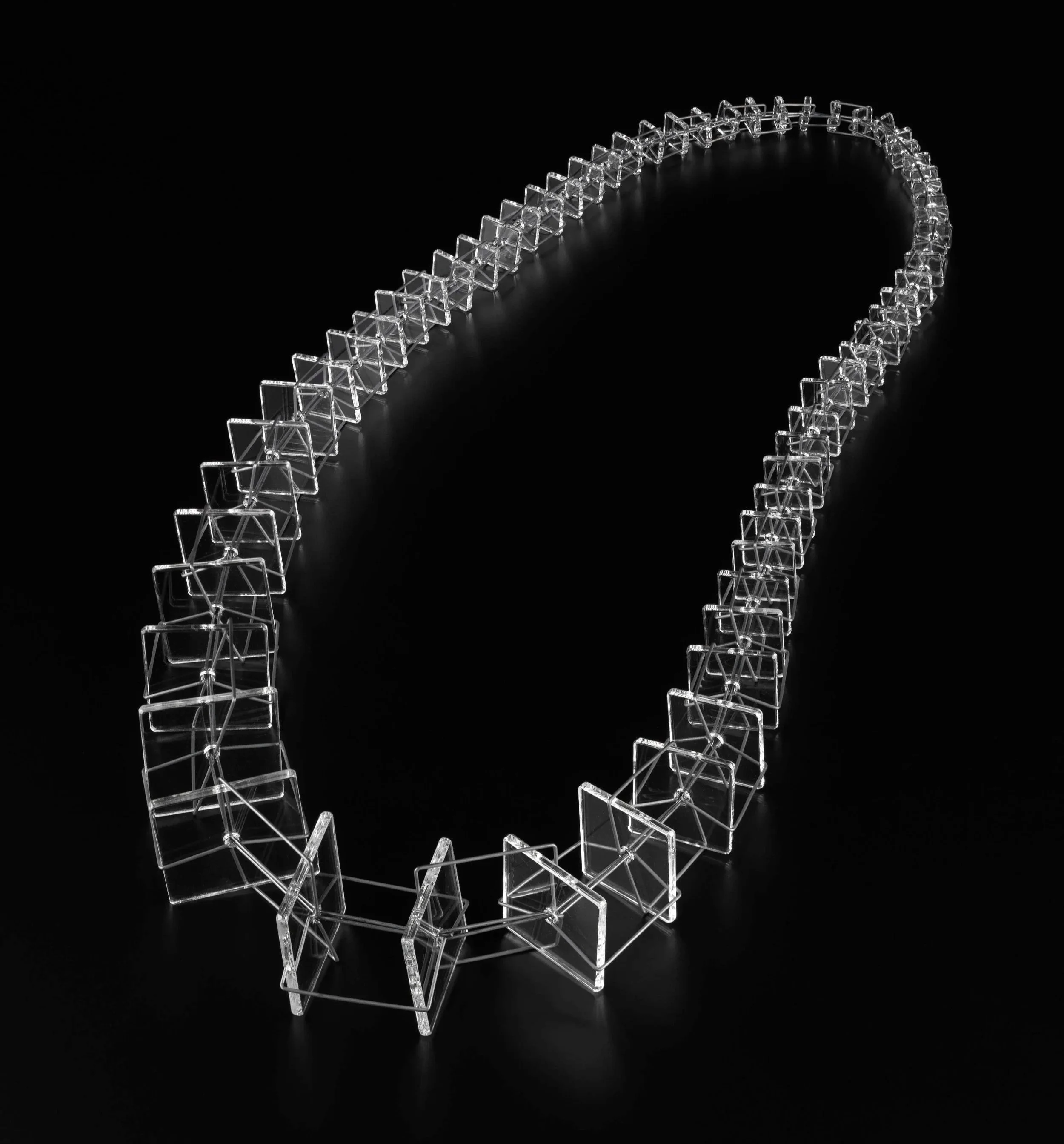
Blanche Tilden, Graded Grand Palais necklace, 2015. Flameworked borosilicate glass, oxidised 925 silver. Photography: Grant Hancock