

A seat at the table: then what do we do with it?
By Hans Galutera
Design is not only about the spaces, systems or products we create, but their effect; what they enable people to do, experience and become. A room can enable someone to feel safe. A system can enable an older person to live independently or a neurodivergent child to participate more fully in learning. A ship can carry thousands of passengers or become a floating forum for the exchange of ideas.

Hans Galutera
The true measure of design lies in these effects: how it enables people to live, heal, learn, age and belong. That is why designers must be at the table when society’s needs are being identified, helping to anticipate challenges and shape responses before problems arise.
Too often, however, designers are invited into the conversation late, asked to deliver rather than help define what needs to be achieved. This overlooks one of design’s most valuable capabilities: the ability not only to create spaces, systems and products, but to orchestrate their effect. Designers can help frame the problem, identify what an intervention needs to enable, and shape the conditions for better outcomes. The challenge is not that design has too little to contribute, but that too few people understand who designers are, what designers do, and why design belongs at the table from the outset.
My reflection on the role of design advocacy grew out of a recent return to Australia for business, where I was invited to speak in Sydney about the forces reshaping the interior design industry and the design profession more broadly. During that visit, I met DIA CEO Simone LeAmon, and our conversation turned to the United Nations initiatives I had been participating in around health, ageing, accessibility and climate.
That conversation took on greater significance in light of the DIA’s recent Write DESIGNER campaign and its ongoing advocacy with the Australian Bureau of Statistics. It reinforced a simple but important point: for designers to influence the conversations shaping society, their role and contribution must first be recognised by society.
Occupational classification and the data it generates may sound bureaucratic, but their influence is far-reaching. They shape how the design workforce is understood and inform decisions across education, policy and investment. If design is poorly defined, its contribution is poorly understood, and when it is absent from the evidence, it becomes far harder to make the case for design’s place in the decisions that evidence informs. Recognition, then, is not the end goal of advocacy; it is what helps earn design a seat at the table.
But earning that seat raises a more important question: once designers are at the table, what do we bring to it?
My understanding of design as a profession that works across interconnected systems began at sea, designing maritime interiors. Cruise ships taught me to think beyond individual staterooms: a ship is a floating city with nowhere to hide its mistakes. Housing, hospitality, healthcare, navigation, energy and human behaviour must coexist within one moving system. On land, one department can usually blame another. At sea, everybody is quite literally in the same boat.
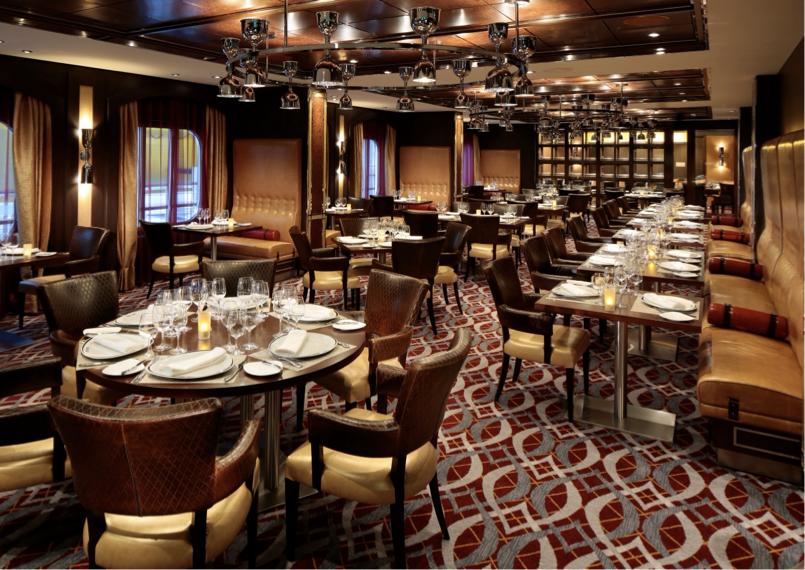
HG Design Works in collaboration with BG Studio International, interior design for Chops Grille on Ovation of the Seas, Quantum Class vessels, Royal Caribbean International.
Ships also taught me that experience is never produced through aesthetics alone. A beautiful stateroom is not successful if a passenger cannot navigate the corridor leading to it. A spectacular dining room fails if noise makes conversation impossible. Design succeeds when systems work for people, and when the relationships between people, places, services and the world around them work better as a result. This is why the recognition of contemporary design occupations matters. Designers increasingly work across traditional boundaries, connecting parts to wholes and translating complexity into lived experience. A decision made in one part of a system will ultimately be felt somewhere else, by someone or the ecosystems we share.
In 2016, my maritime experience brought me into contact with Peace Boat, a Japan-based international NGO promoting peace, human rights and sustainability, and its development of Ecoship, an ambitious project that sought to reimagine what a cruise ship could be, environmentally and socially. While the commission for the project ultimately did not eventuate, the proposition behind Ecoship stayed with me: what if a ship were designed not simply to transport and entertain people, but as a floating forum for learning and exchange, a laboratory for new ideas, and an instrument of peace?
Reconnecting with Peace Boat at the United Nations High-Level Political Forum on Sustainable Development in July this year, I heard from young people whose home nations and futures face unimaginable challenges from the effects of climate change. Their stories were a powerful reminder that the challenges we face do not conform to professional boundaries. Climate, ageing, disability and inequality do not present themselves as neatly separated design briefs; they are interconnected conditions, shaped by relationships between people, places, systems and the environment. Design’s task is to understand those relationships, make their interdependencies visible, and work alongside the people whose lived experience must ultimately shape the outcome.
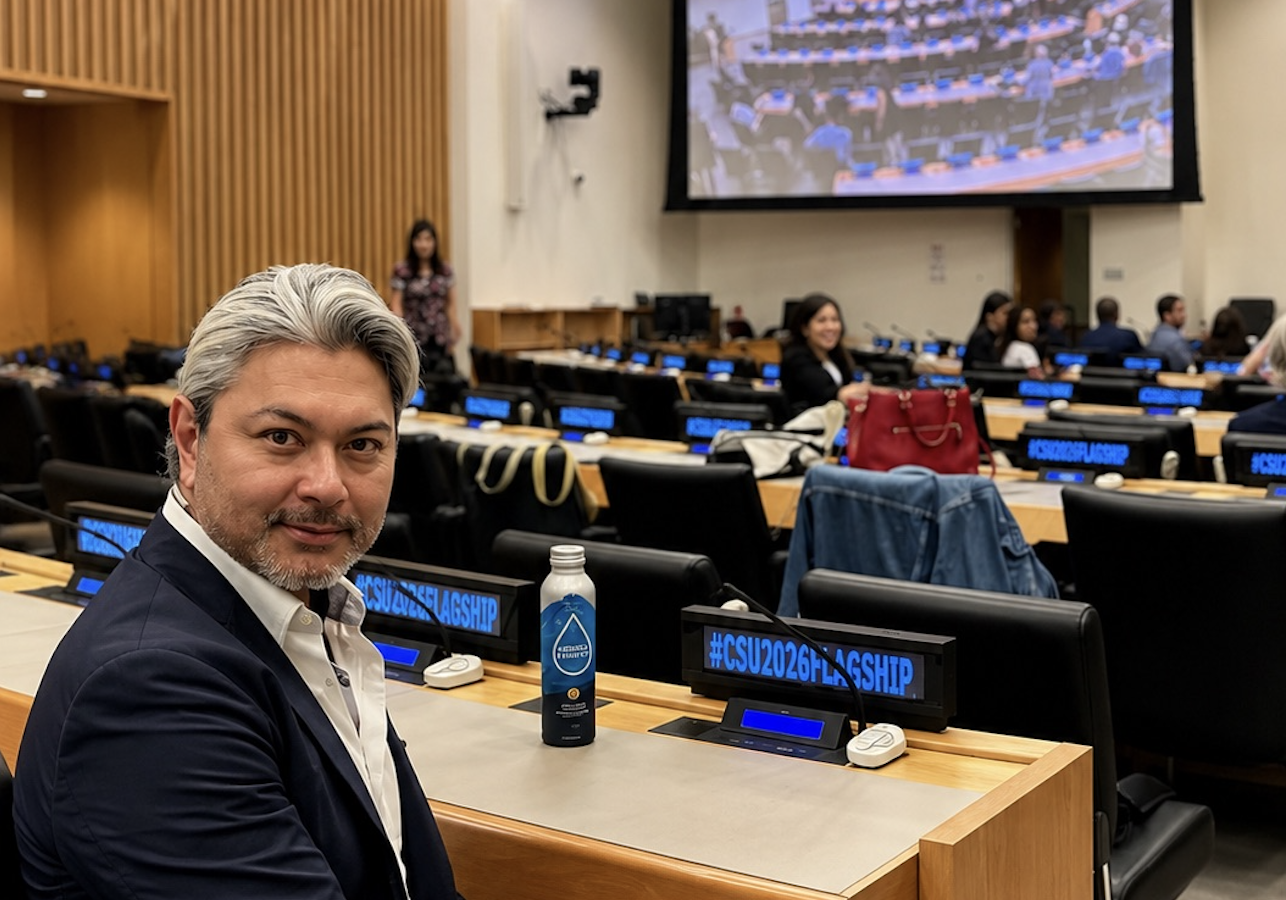
Hans Galutera, Consortium for Sustainable Urbanization (CSU) Regenerative Communities Summit, United Nations, 2026
But if designers are to enter those broader conversations with authority, we must be able to do more than articulate what we believe design can achieve. Designers have long trusted their eyes, instincts and experience, and we should, but when we enter discussions about health, policy or public investment, intuition cannot carry the entire argument. “Trust me, I’m a designer” may be persuasive in the studio, but it is not evidence.
This is where the DIA’s advocacy becomes especially important. Occupational recognition establishes who is doing the work; evidence helps establish what that work enables and why it matters. One makes the profession visible; the other makes its contribution credible. Together, they strengthen design’s claim to a seat at the table, not simply because designers want to be there, but because we can demonstrate the value of what we bring.
The future of design will not be determined only inside design studios. It will be shaped in hospitals, classrooms, community meetings and in the datasets used to decide which professions matter. For Australian designers, the practical challenge is simple, though perhaps uncomfortable: attend one gathering this year where nobody shares your professional title. Speak with an occupational therapist, gerontologist or disability advocate. Listen for the design problem hidden inside another discipline’s language. Invite that knowledge in before the answer has been drawn, and return after completion to ask what worked, what did not, and what should change next time.
We belong in those rooms not because we possess every answer, but because we are trained to see relationships, reveal possibilities and translate knowledge into form and experience. We should arrive with curiosity, bring evidence, and know when to speak, and, just as importantly, when to listen to what the room is telling us.
Being counted is only the beginning. What we contribute once we have a seat at the table is what will make design really count.
So perhaps the question is no longer simply: What should we design?
But: Who should we be designing the future with?
Hans Galutera, D.Des., MDIA, is a Melbourne-raised, New York-based interior designer, educator and design advocate. He is Founder of DESIGNHUG—Helping Us Grow and Principal of HG Design Works; Vice President of NY11+; Past President of IIDA New York; International Education Ambassador for SBID; and an appointed member of the New York State Board for Interior Design and Design Institute of Australia, Accredited Designer. His work connects design with accessibility, ageing, health, education, maritime environments and human experience through practice, advocacy and international dialogue.