

New DIA resources for Interior Designers
The Design Institute of Australia has released a suite of three resources designed to strengthen understanding of interior design both within the profession and among the clients and communities it serves.
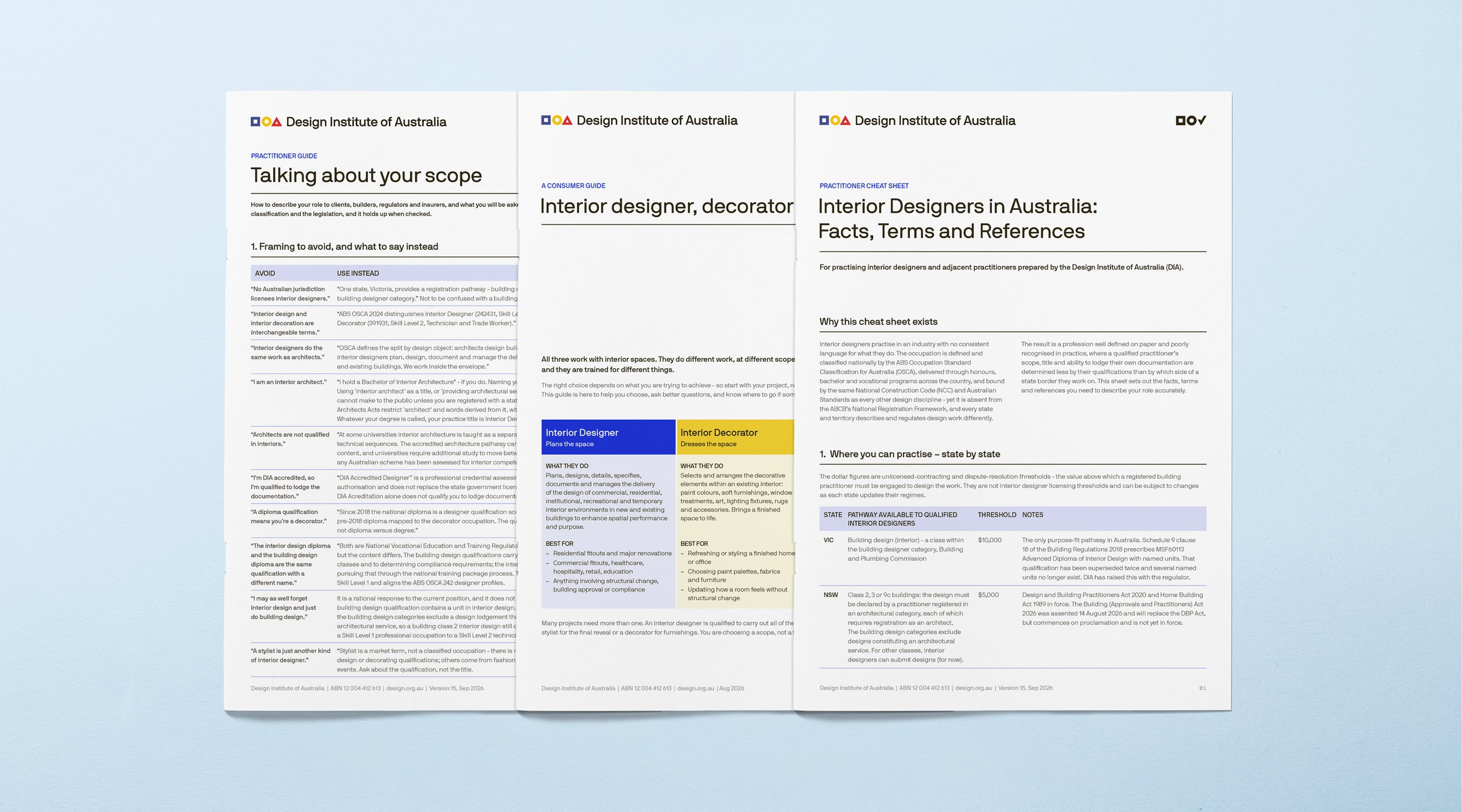
The Consumer Guide: Interior Designer, Interior Decorator or Stylist? helps the public understand the differences between these three occupations, what to look for when engaging a practitioner, and how to make the right choice for their project.
For practitioners, the Practitioner Cheat Sheet: Interior Designers in Australia - Facts, Terms and References provides a technical reference covering how interior design is classified, qualified and regulated across Australia. It includes state-by-state pathways, the distinction between DIA accreditation and statutory registration or licensing, and the scope differences between interior designers, decorators and stylists.
Its companion, Talking About Your Scope turns that evidence into practice, helping interior designers accurately describe their qualifications, scope and professional standing to clients, builders, regulators and insurers. It identifies common misconceptions and provides precise alternatives grounded in occupational classification and legislation.
Together, these resources give the profession something it has long been missing: a shared language, an authoritative evidence base and practical tools for communicating what qualified interior designers are trained and qualified to do.
Developed through the advocacy work of the DIA’s National Interior Design Working Group, chaired by Melanie Mackenzie, with Jo-Ann Kellock, the resources form part of the DIA’s broader work to strengthen recognition of interior design within Australia’s professional and regulatory frameworks. This is advocacy at its most practical: helping the public make informed decisions while equipping practitioners with the evidence and language to confidently articulate their capability, scope and value.