

Publishing a monograph on Australian design practice is no small undertaking. Beyond the considerable investment of time, resources and creative energy, these publications play a vital role in documenting our design culture for future generations. To celebrate the release of Robson Rak: Permanent Residence, published by Thames & Hudson, DIA CEO Simone LeAmon speaks with Kathryn Robson and Chris Rak about the experience of distilling twenty years of practice into print. From the challenges of editing and reflection to the enduring value of the physical book, their conversation reveals why publishing Australian design matters.
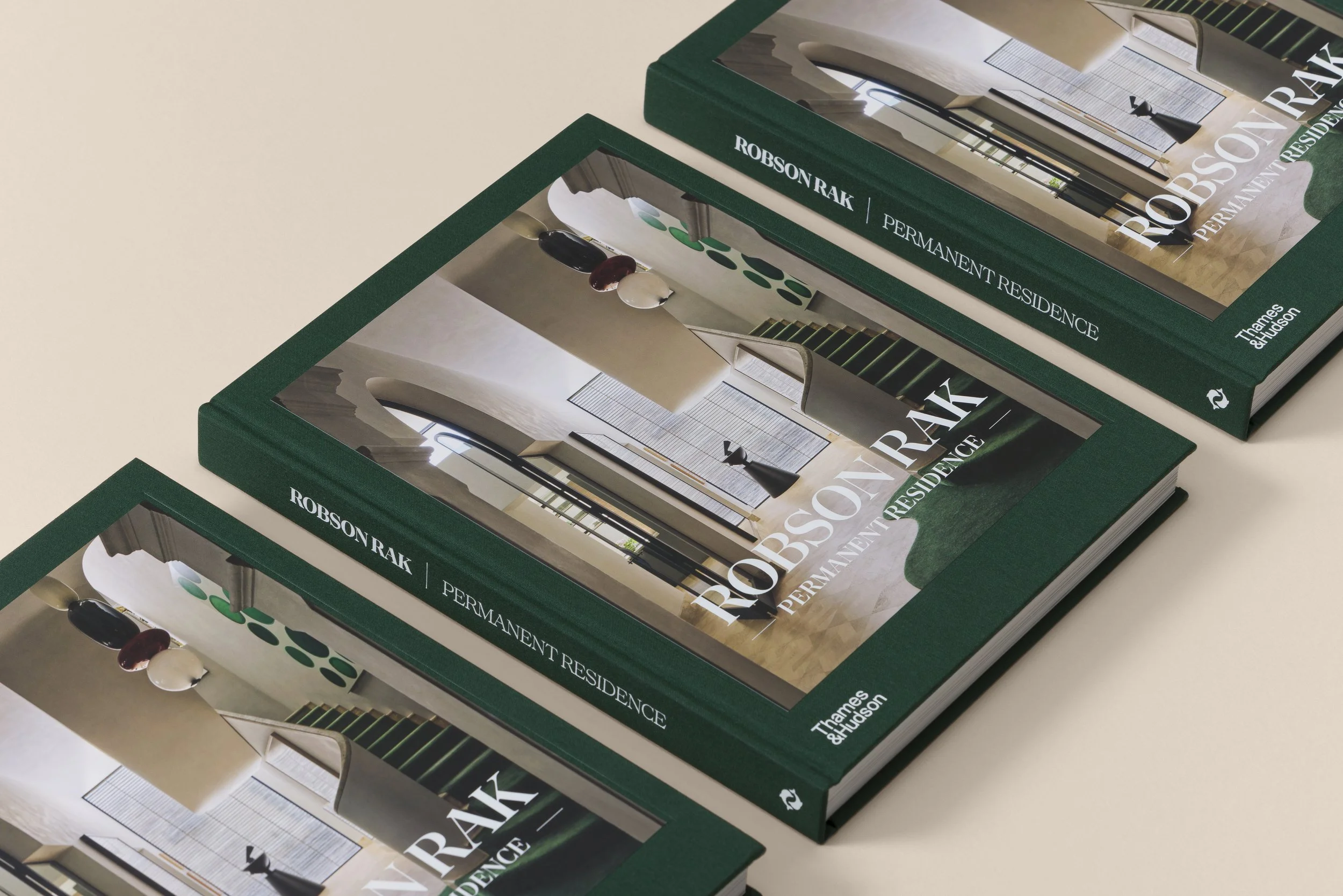
Image courtesy Thames & Hudson.
S.L. What prompted you to embark on the book? Was there a particular moment when you felt it was time to bring together your body of work, or did the idea emerge more organically through conversations about the evolution of the practice?
RR: To be honest, a book wasn’t something we’d been planning. Thames & Hudson had been following our work for some time and approached us with the idea. Their interest prompted us to look back and realise we’d been working together for twenty years. In retrospect, the timing was perfect: it felt like the right moment to bring together the homes, ideas and collaborations that had shaped Robson Rak. After a few conversations, the publisher was excited by the prospect of seeing two decades of our work in print, and the project gathered momentum from there.
From the outset, we knew we wanted the book to be more than a collection of finished photographs. It gave us the chance to step back, consider the key principals that connect our work, and share some of the thinking behind the homes we’ve created. Permanent Residence felt like the right title: it speaks to a home as an anchor in someone’s life, and to the qualities we hope will endure in the architecture and interiors we create.

Chris Rak and Kathryn Robson. Photo Anson Smart.
SL: Producing a monograph is a significant undertaking, particularly alongside the demands of running a busy studio. How did you approach the process of developing the book, from selecting projects and gathering archival material to working with the publisher and creative team? What were some of the challenges and unexpected pleasures of the exercise?
RR: We approached the book as a design project. Rather than arranging the homes chronologically, we looked for connecting principals between them and developed a sequence that would reveal the ideas running through the work. Selecting projects, photographs, drawings and archival material meant deciding what best expressed those ideas, and occasionally resisting the urge to include everything we’d ever drawn.
The process was a significant undertaking alongside the day-to-day demands of the studio. There was a great deal to revisit, edit and resolve. But it was a pleasure to see projects we’d known individually begin to speak to one another across the pages. Looking back also brought the occasional surprise: a detail we’d almost forgotten could feel completely fresh again. Working with Thames & Hudson, designer Marcus Piper and writer Heidi Dokulil was generous and collaborative. Each brought valuable insight and a different perspective to the challenge of translating spaces experienced through light, movement and time into a book you can hold in your hands.
SL: A publication such as this offers a rare opportunity to step outside the day-to-day demands of practice and consider the work as a whole. What did the process reveal to you about the evolution of Robson Rak? Were there recurring ideas, influences or approaches that became more apparent when you saw the projects brought together?
RR: Stepping back helped us recognise how consistent some of our instincts have been, even as the work has evolved. We’ve always been interested in the experience of the whole home: how you arrive, move through it, and take in the views, and how spaces feel at different times of day. We also saw how often ideas cross between scales and disciplines. A staircase can become sculpture; a floor can establish a visual rhythm; a courtyard can bring light and nature into daily life. The projects are varied, but our attention to proportion, light, materials, craft and the people who live in each home remains constant. It was reassuring to see that we hadn’t spent twenty years simply changing our minds about everything. There are threads running through the work, even if each project finds its own expression.
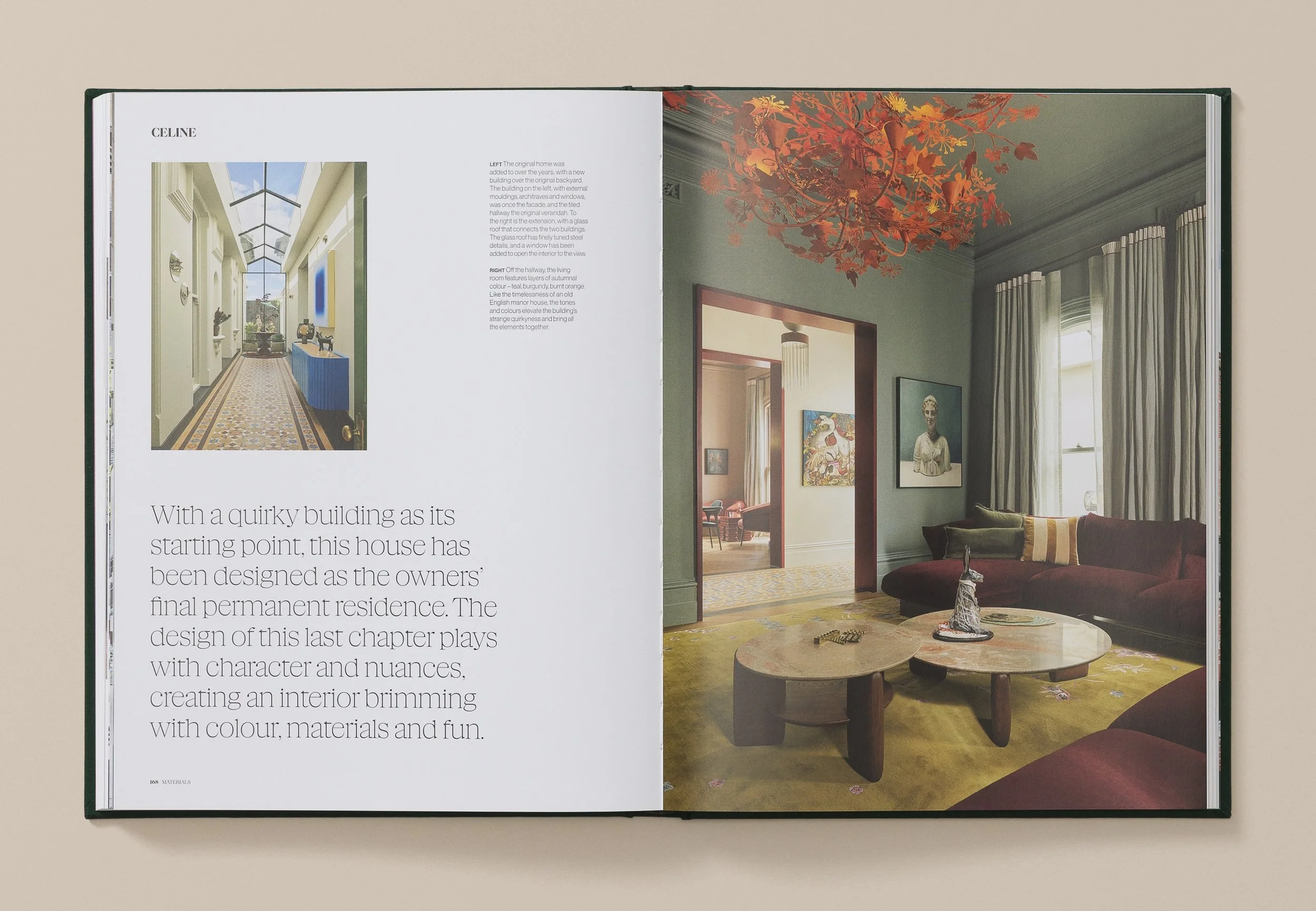
Image courtesy Thames & Hudson.
SL: The book explores eight themes that define your approach: First Impressions, Light, Simplicity, Nature, Materials, Sculpture, Authenticity and Balance. How did you arrive at these themes? Did they emerge through the editorial process, or were they principles you had consciously articulated within the studio over time?
RR: The themes emerged through the editorial process, as we looked across the projects and tried to articulate what connected them. Many were principles we’d followed instinctively rather than formally named within the studio. It’s one thing to work by instinct; it’s another to explain that instinct in a chapter heading.
The book’s eight themes, First Impressions, Light, Simplicity, Nature, Materials, Sculpture, Authenticity and Balance gave us a way to explore those ideas across different homes. The projects aren’t examples of a single style; they show how the same principles can lead to very different outcomes. Balance, in particular, connects many of the themes: old and new, openness and privacy, richness and simplicity, restraint and expression. The process helped us put words to a way of thinking that has developed through practice.
SL: Your partnership brings together Kathryn’s architectural sensibility and Chris’s background in art, sculpture and design. How have these distinct perspectives shaped the identity of Robson Rak? Looking back over the years, how has your creative dialogue evolved, and what have you learned from one another?
RR: Kathryn leads the architecture and Chris leads the interiors, but the boundary between the two is never fixed. We influence one another throughout a project, considering architecture, interiors, furniture, lighting, art and landscape as part of the same conversation from the beginning. Our different ways of thinking complement each other, and over time our creative dialogue has become more instinctive. We’ve learned to value what the other brings to a project, question our decisions and stay open to new possibilities. That exchange is central to the identity of Robson Rak.
SL: Permanence is central to your work. What does it mean to you, particularly in a world of changing needs, technologies and environmental responsibilities?
RR: For us, permanence is less about a house remaining unchanged and more about giving it the foundations to stay meaningful as life evolves. That starts with understanding the people who will live there, the character of the place and how the house needs to work. From there, we make thoughtful decisions about light, proportion, materials and the way spaces connect.
We’re drawn to materials that can be repaired, maintained and grow more characterful with time, and to homes that respond to their surroundings rather than compete with them. This kind of longevity matters environmentally, but it also gives a home a deeper sense of belonging. Art, furniture and daily life will change; a well-considered home makes room for that. It should feel right from the beginning and be made to serve its occupants well as the years leave their mark.
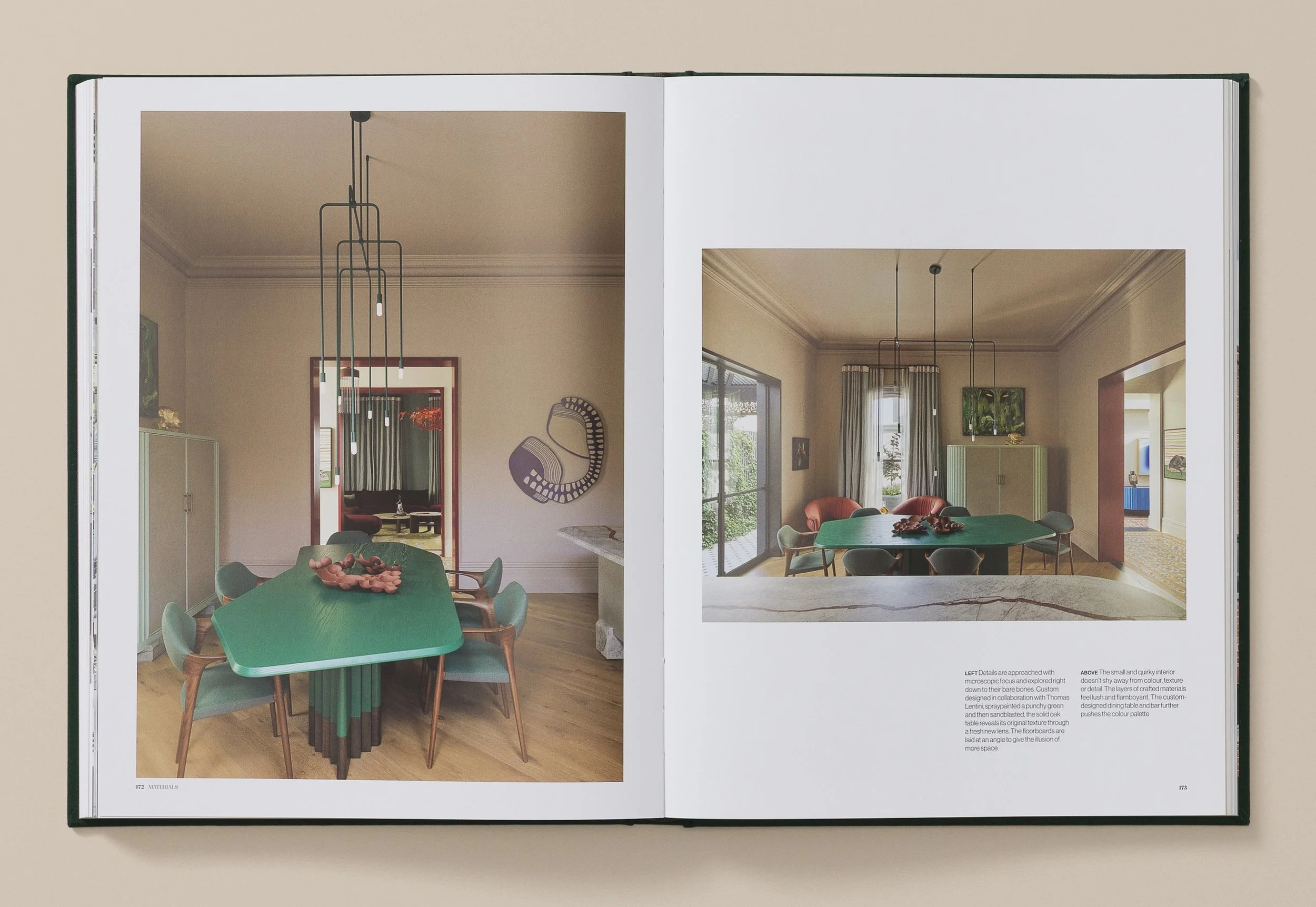
Image courtesy Thames & Hudson.
SL: Beyond showcasing completed projects, architectural and design monographs contribute to a broader cultural record of design practice. What do you believe publications such as yours offer the profession, particularly emerging practitioners? How important is it that Australian designers document and share not only what they create, but also the thinking, experimentation and relationships behind the work?
RR: A publication can preserve more than the finished image of a project. It can record the ideas, experiments, collaborations and decisions that shaped the work, and show how a practice develops over time. A photograph may make a space look effortless; a book can reveal some of the thought and work behind it.
We hope it gives emerging practitioners a sense of how many people contribute to a home: clients, architects, designers, artists, craftspeople and builders. The work is rarely the product of one person alone. Sharing the process makes the care and exchange behind what is built more visible. It also adds to a broader record of Australian design and can offer a point of reference for future conversations. And there’s something special about seeing the work gathered in a thoughtfully made, physical book: a lasting object people can return to, rather than another collection of images passing by on a screen.
SL: Having undertaken this substantial exercise in reflection, has the experience changed how you think about the future of Robson Rak? As you enter the next chapter of the practice, what ideas, ambitions or questions are occupying your attention, and what would you like the book to communicate about the values that will continue to guide your work?
RR: Making the book has clarified what we value and renewed our enthusiasm for the work ahead. In many ways, we feel fortunate to be living out the ambitions we had when we began. We want to continue with passion and gusto, while staying open to what each new project can teach us. We’re still curious about materials, art, landscape and the knowledge of the people we collaborate with. Each client and place brings different questions, and we want to keep developing the practice while giving every home the attention it deserves.
We hope the book communicates that our work is guided by care: for the people who will live in these homes, the places they belong to, and the materials and relationships that shape them. Our ambition is to keep making homes that enrich people’s lives and grow more meaningful with time.